Blog

The biggest challenges facing councils in 2026 (And How Leading Councils Are Solving Them)

Local authorities across the UK and Ireland are under increasing pressure to deliver more with less. Budgets are tightening, workforces are more dispersed, and expectations continue to rise. Yet despite this, many councils are still relying on communication methods that weren’t designed for today’s reality.

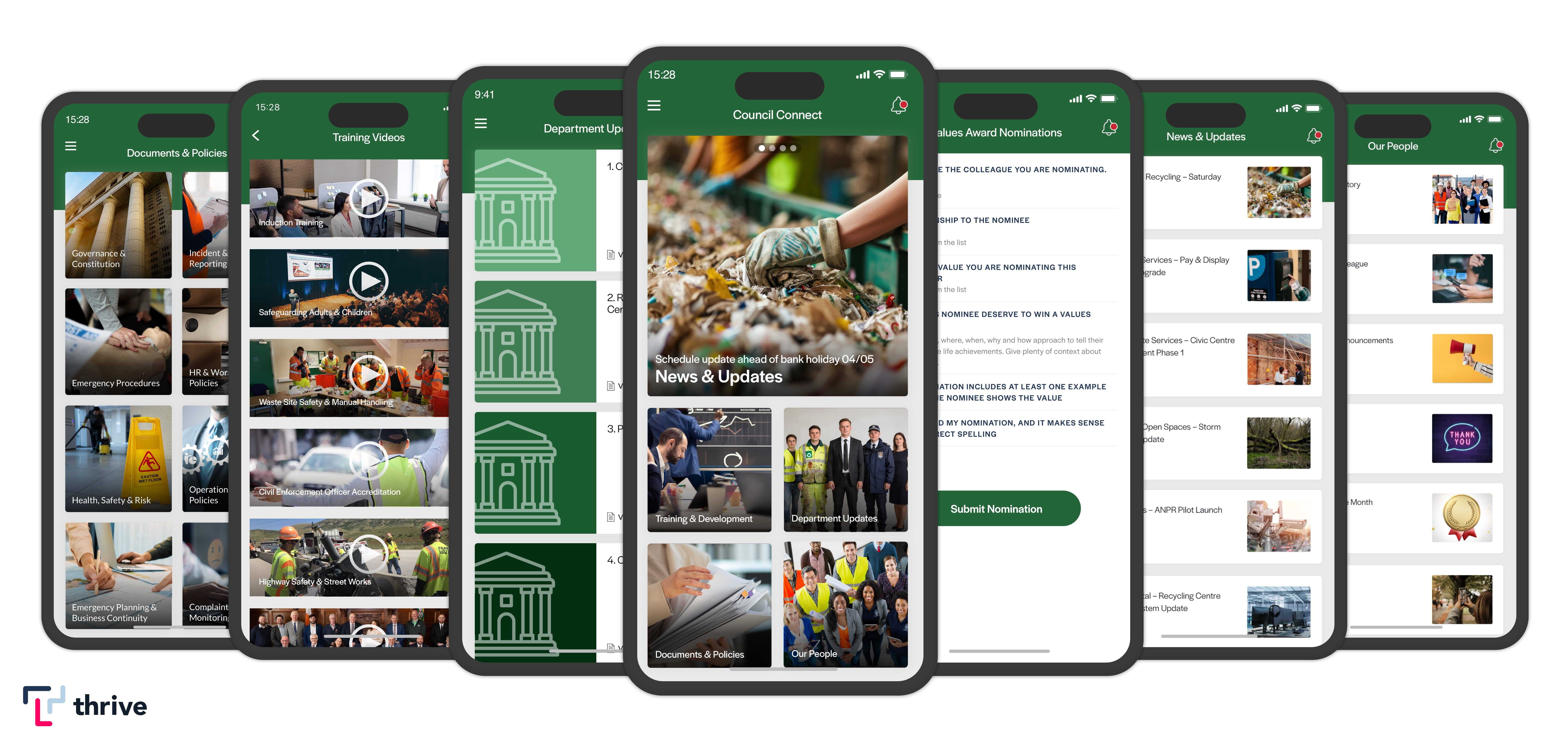
Image of Grainne Elliott, Chief Marketing Officer, Thrive

By Grainne Elliott, Chief Marketing Officer, Thrive 28 April, 2026

Council Flat Lay 3 1

1. Councils struggle to reaching deskless employees

A large percentage of council employees don’t sit behind desks.

  • Waste collection teams
  • Housing officers
  • Maintenance crews
  • Social care workers
  • Environmental services

Yet many councils still rely heavily on:

  • Email
  • Intranets
  • Physical noticeboards

Traditional channels like email and intranets simply don’t reach these teams effectively.

The result:

Frontline teams often receive information late, or not at all.

This creates:

  • Inconsistent service delivery
  • Frustration and disengagement
  • Increased operational risk

What’s changing:

Forward-thinking councils are shifting to mobile-first communication strategies, ensuring every employee, regardless of role or location, receives critical updates at the same time.

Real example: 

Councils like Meath County Council have already addressed this by introducing mobile-first communication with Thrive, ensuring indoor and outdoor teams receive updates at the same time.

Meath County Council recognised early on that outdoor and indoor staff were operating in silos. By introducing a mobile-first communication approach, they ensured all employees received updates simultaneously, regardless of location.
2. Siloed communication across departments

Local authorities are complex ecosystems. Housing, planning, finance, HR, and environmental services often operate independently.

Without a central communication layer:

  • Messages are duplicated (or missed entirely)
  • Teams operate with different versions of the truth
  • Cross-department collaboration suffers

The operational impact is real:

  • Slower decision-making
  • Reduced efficiency
  • Poorer outcomes

For example, councils like Cardiff Council and Gwynedd Council manage thousands of employees across multiple services, making consistent communication a structural challenge.

What’s changing:

Councils are moving towards single-source communication platforms that unify messaging across departments, ensuring clarity, consistency, and alignment.

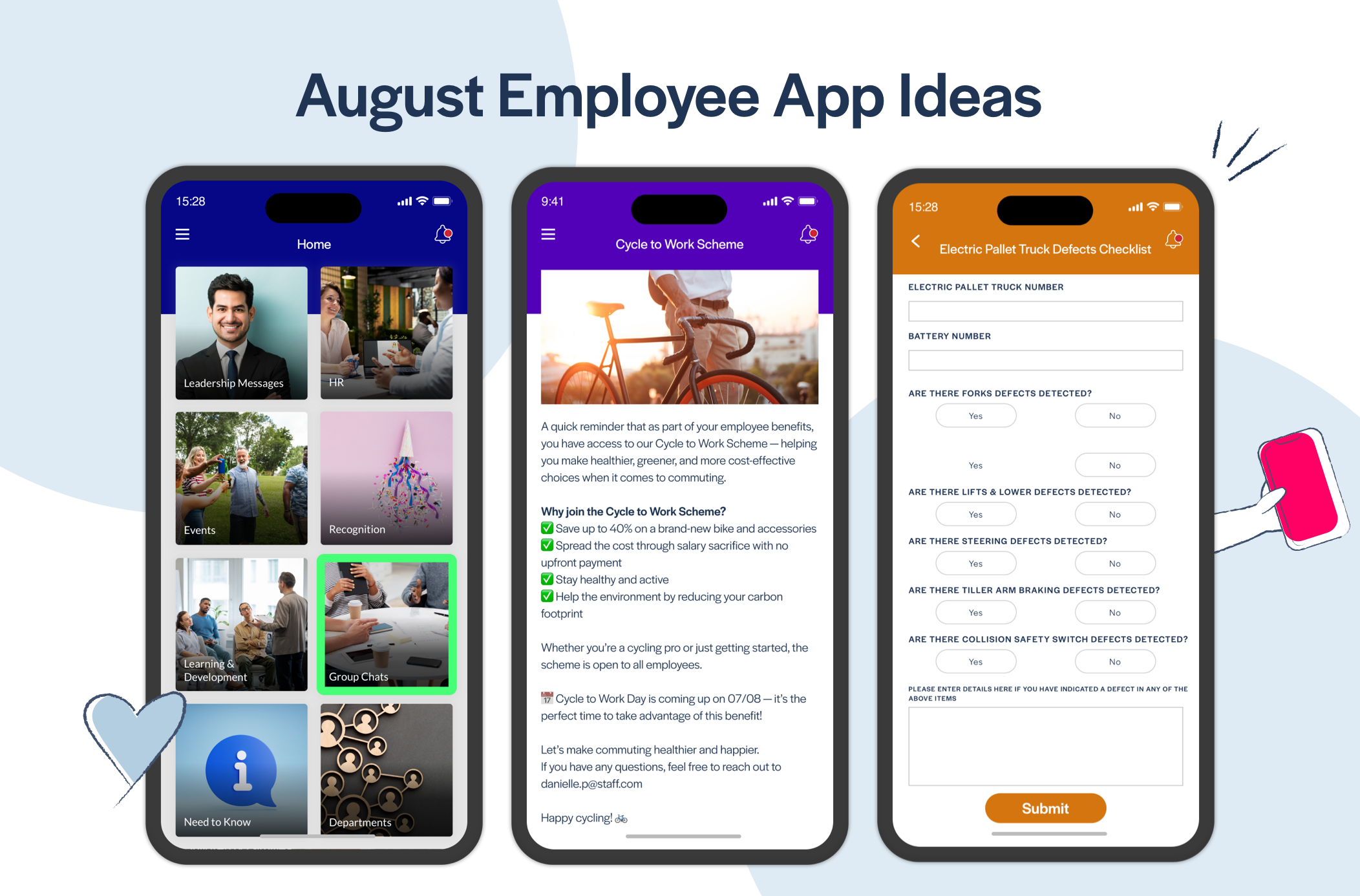
Recruit and Retain 2x 2025 01 10 140357 niya

3. Uneven employee engagement

Employee engagement within councils isn’t simply a “low vs high” issue.

It’s uneven.

Office-based staff are typically:

  • More informed
  • More connected
  • More engaged

While deskless teams often feel:

  1. Out of the loop
  2. Undervalued
  3. Disconnected from leadership

This imbalance has a direct impact on:

  • Morale
  • Retention
  • Productivity

What’s changing:

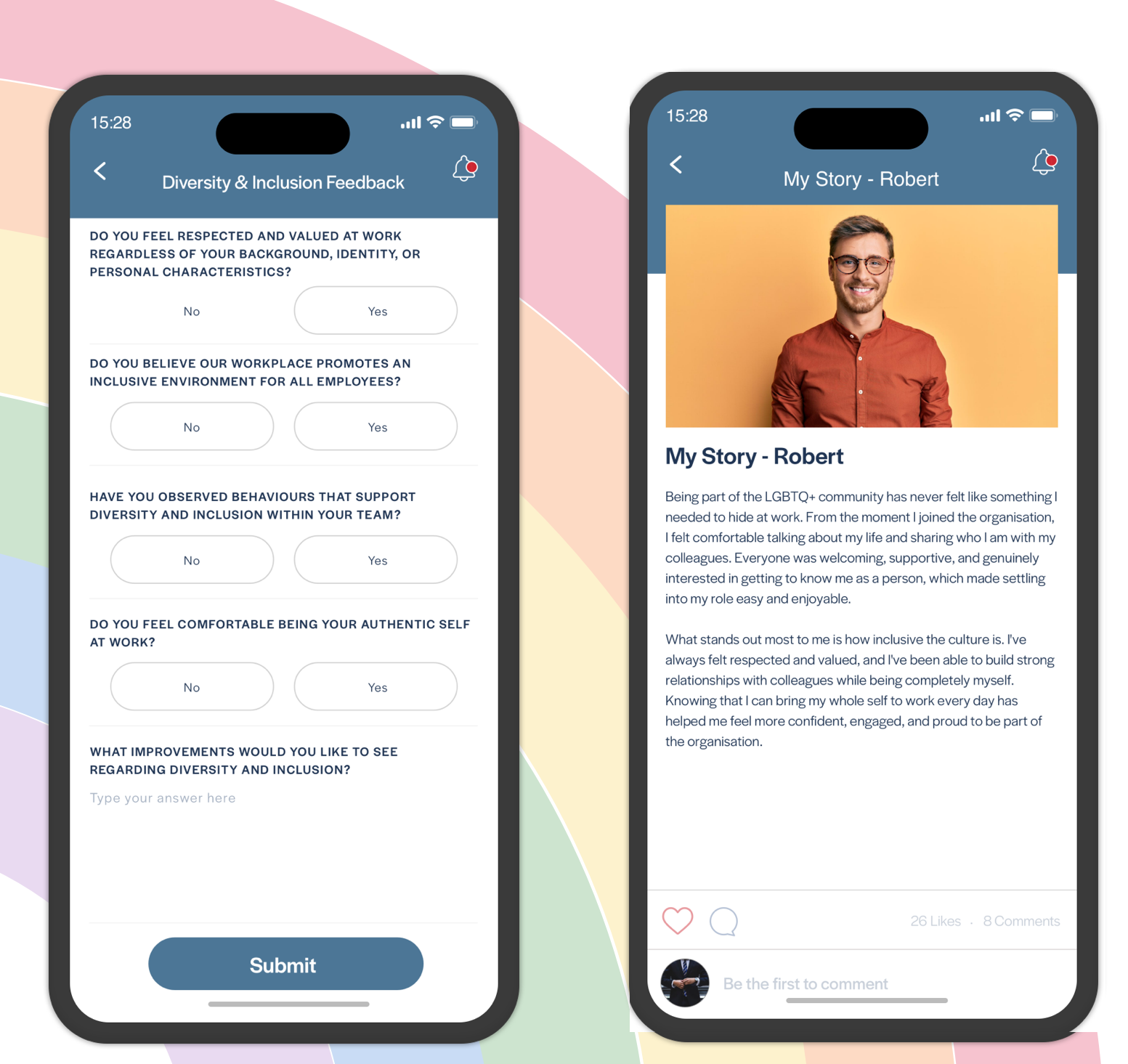
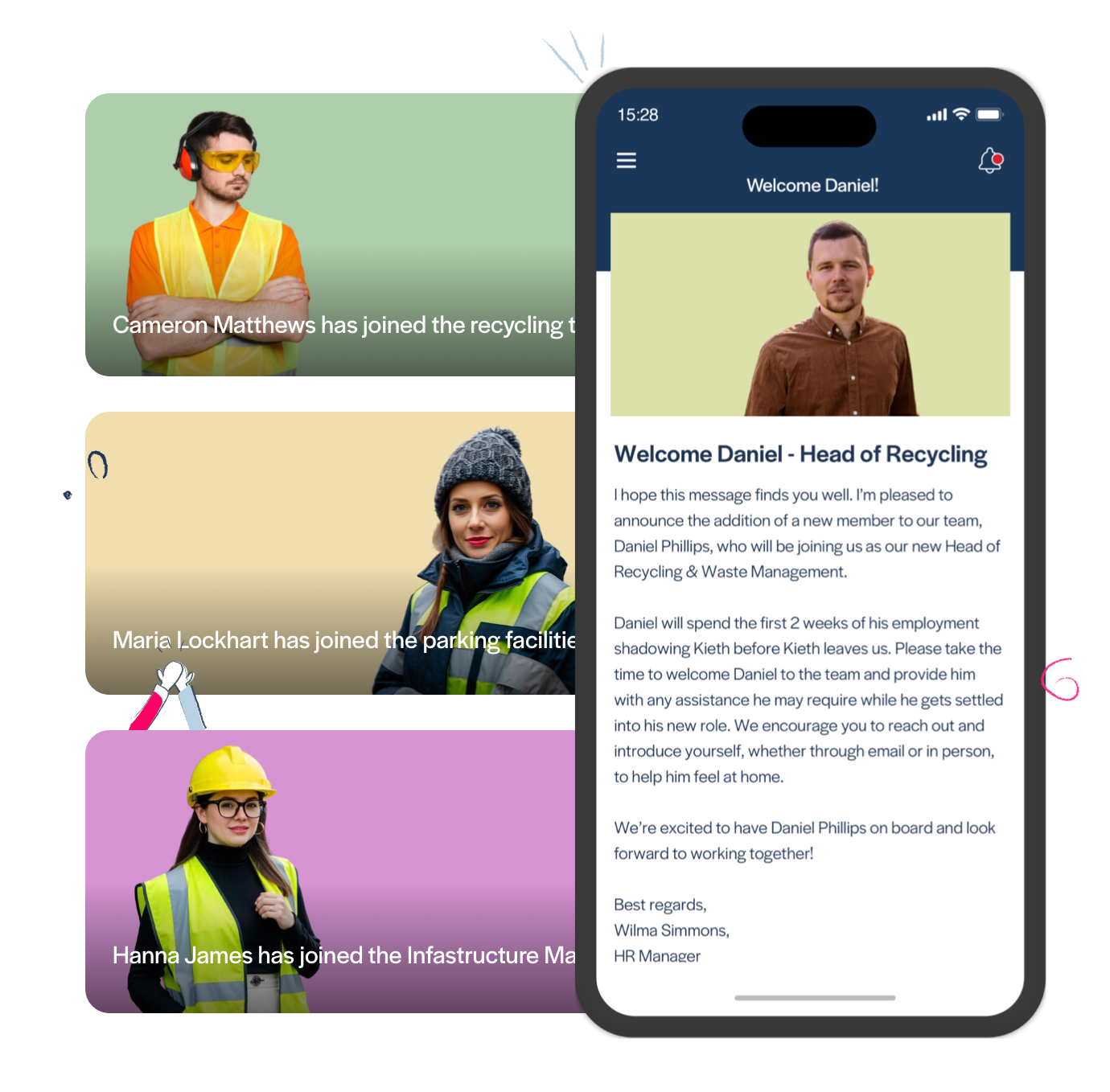
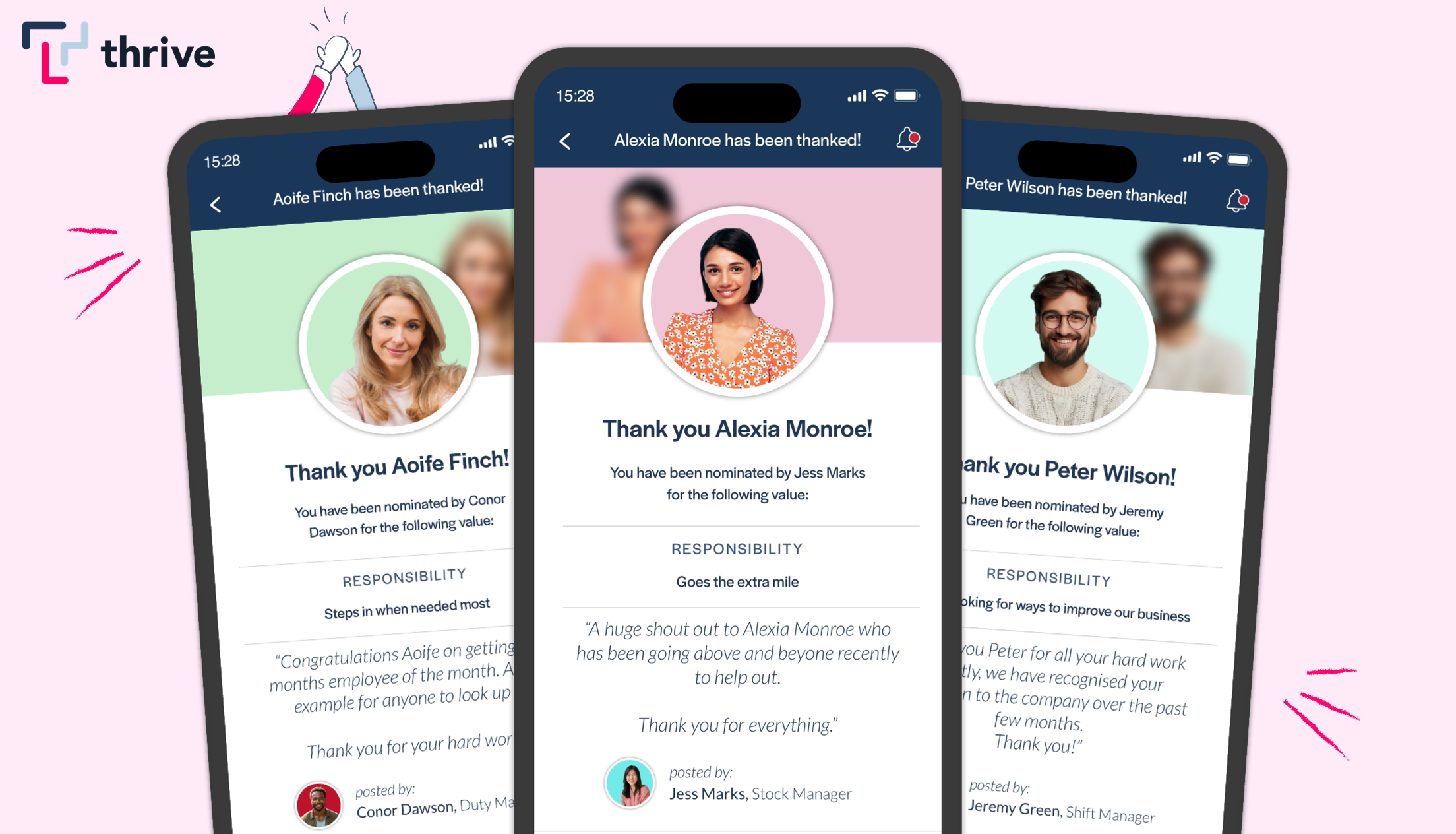
Leading councils are focusing on inclusive communication, ensuring every employee has equal access to updates, recognition, and opportunities to contribute.

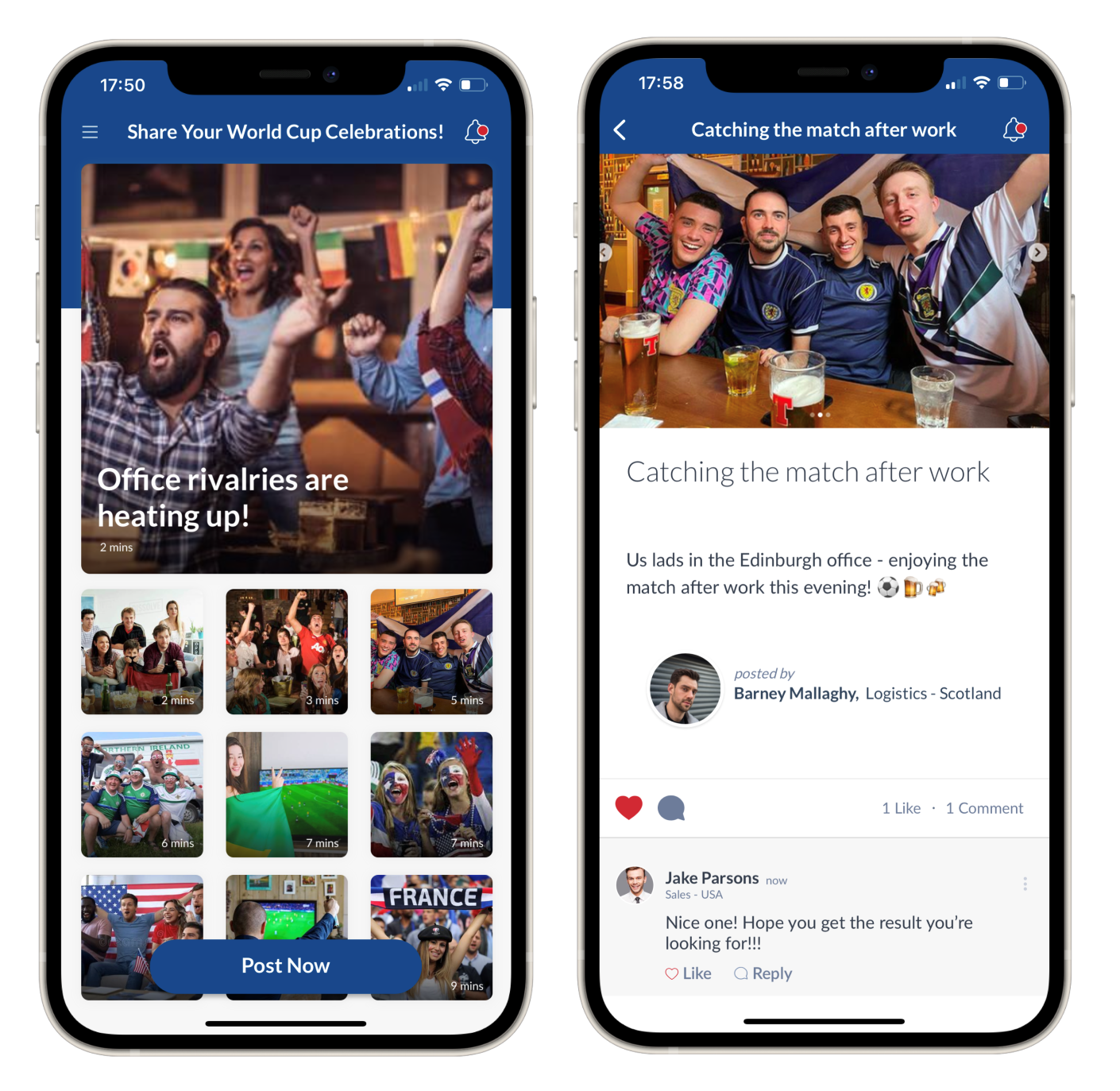
User Generated Content Recognition 2x

4. Critical messages are not being acknowledged

In sectors like local government, communication isn’t just about awareness; it’s about accountability.

Policies, safety updates, and operational changes need to be:

  • Seen
  • Understood
  • Confirmed

But with traditional channels:

  • There’s no guarantee messages are read
  • No audit trail
  • No way to follow up effectively

This creates compliance risk.

What’s changing:

Councils are adopting tools that enable:

  • Message acknowledgements
  • Automated reminders
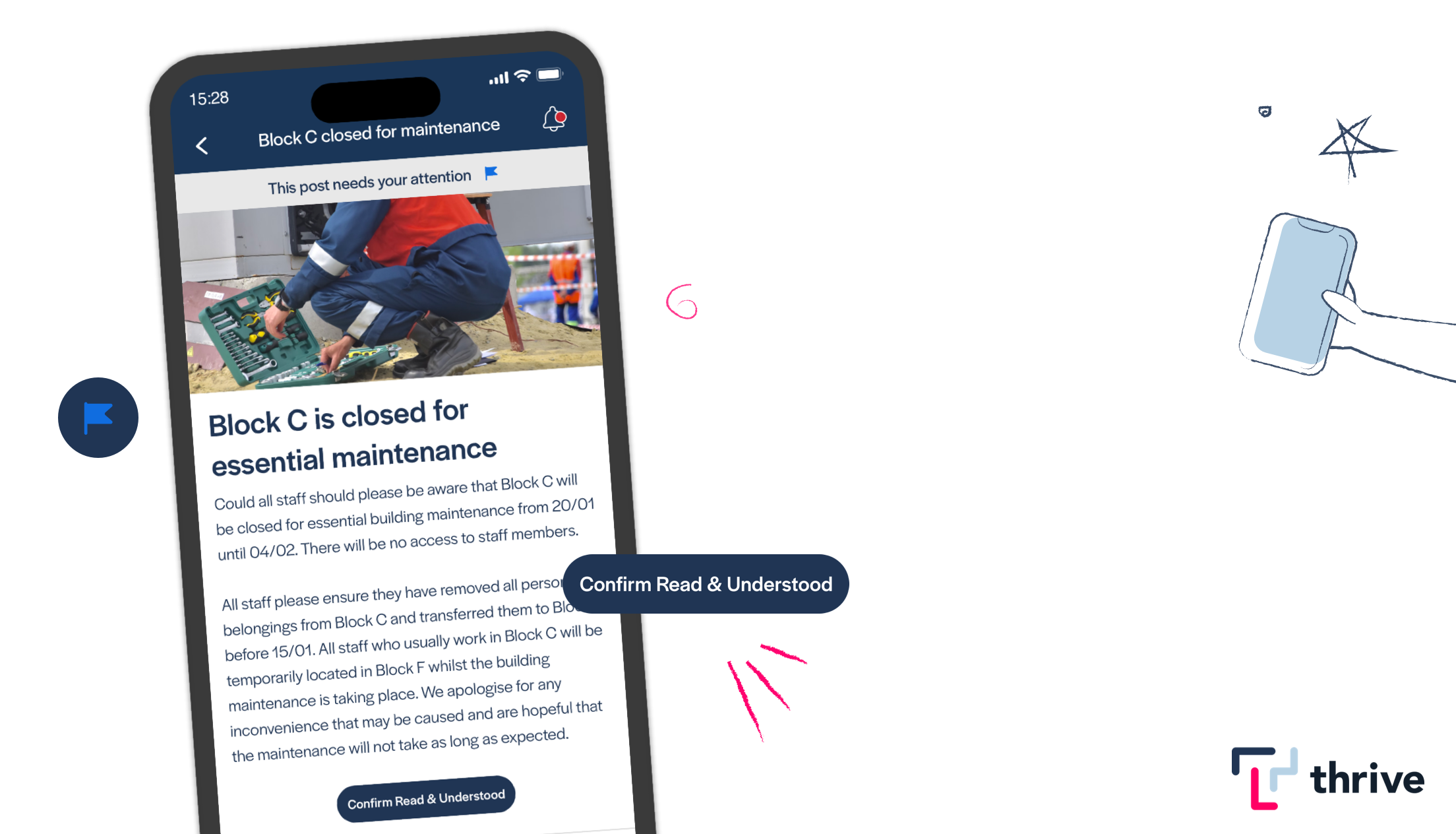
  • Clear reporting on who has (and hasn’t) engaged

Acknowledgements 2x

5. Language & accessibility barriers

Modern council workforces are increasingly diverse.

Challenges include:

  • Multilingual teams
  • Varied literacy levels
  • Different levels of digital confidence

If communication isn’t accessible:

  • Messages are misunderstood
  • Engagement drops
  • Compliance risks increase

What’s changing:

Some councils are introducing real-time content translation and simplified, mobile-friendly formats to ensure communication is understood by everyone.

Translation 2x

6. Too many systems, not enough adoption

Most councils already have tools in place:

  • HR systems
  • Payroll portals
  • Intranets
  • Scheduling tools

But employees don’t engage with multiple systems consistently.

Employees are expected to:

  • Remember multiple logins
  • Navigate different platforms
  • Search for information

In reality, If it’s not simple and mobile, it’s not used.

What’s changing:

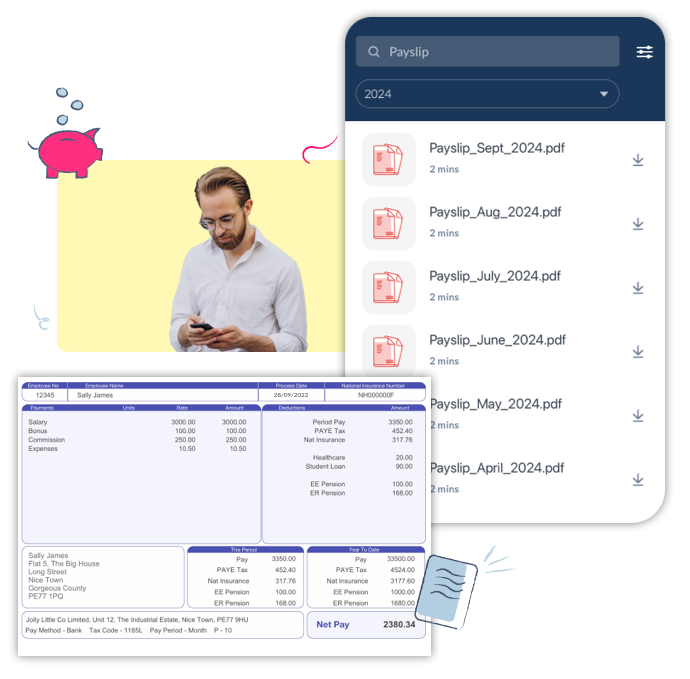
There’s a shift towards creating a single digital front door; a central hub where employees can access everything they need in one place.

1x Mobalise Payroll

7. Budget pressure vs digital transformation

Local authorities are under constant pressure to:

  • Improve efficiency
  • Digitise services
  • Enhance employee experience

All while:

  • Managing budget constraints
  • Justifying ROI

This creates hesitation around new technology investments and creates a critical question: "How do you justify investment in internal communication?"

What’s changing:

More councils are evaluating solutions based on:

  • Measurable productivity gains
  • Reduction in turnover
  • Time saved in internal processes
  • Employee engagement uplift
  • Improved service delivery

The focus is shifting from cost to impact.

8. The need for instant crisis communication

Whether it’s:

  • Severe weather
  • Public health updates
  • Service disruptions

Councils need to communicate quickly and clearly. Traditional channels simply aren’t built for urgency.

Delays lead to:

  • Confusion
  • Operational breakdowns
  • Public dissatisfaction

What’s changing:

Mobile-first platforms with push notifications are enabling councils to deliver real-time, targeted updates to the right teams instantly.

What leading councils are doing differently

The challenges facing local authorities aren’t going away. But the councils making real progress are those that recognise:

Engagement starts with communication.

Not just more communication; but better communication:

  • Targeted
  • Timely
  • Accessible
  • Measurable

When every employee receives the right information at the right time:

  • Services run more smoothly
  • Teams feel more connected
  • Outcomes improve, for everyone

Progressive local authorities are moving towards

  • Mobile-First Communication: Ensuring every employee—especially deskless teams—receives updates instantly.
  • One Central Communication Hub: Replacing fragmented systems with a single, easy-to-use platform.
  • Measurable Communication Tracking: Message reach, engagement and acknowledgement
  • Inclusive Engagement: Giving every employee a voice and not just those at desks

A Final Thought

Local authorities that succeed in 2026 won’t just communicate more; they’ll communicate better. They don’t need more tools. They need fewer, better-connected ones that actually work for the entire workforce, not just the people behind desks.

Because in today’s environment, the difference between a well-run council and a struggling one often comes down to a single factor: How effectively they communicate with their people.

How Thrive supports Local Authorities

Thrive.App is designed specifically to solve these challenges.

It enables councils to:

  • Reach 100% of employees, including deskless teams
  • Send targeted messages to the right people at the right time
  • Track engagement and acknowledgements in real-time
  • Provide a single digital front door for all employee tools
  • Recognise team members for their outstanding efforts
  • Improve communication without increasing complexity

Learn more about how Thrive supports local authorities

Proof in practice

Councils using Thrive typically achieve:

  • 60–80% plus engagement rates (without relying on email)
  • Faster communication during critical updates
  • Improved connection between frontline teams, HQ and leadership

See how this would work in your council

Related Posts

All Blogs

Use Your Thrive Employee App to Have an Eggstra Special Easter!

By Grainne Elliott, Chief Marketing Officer, Thrive  25 March, 2026

Content Ideas to Make Your Thrive App MUST HAVE this March!

By Ian McCutcheon, Client Success Manager, Thrive  25 February, 2026

Employee App Success

Add Some Festive Cheer to Your Employee App This Christmas!

By Ian McCutcheon, Client Success Manager, Thrive  20 November, 2025

Employee App Success

Make important updates impossible to miss

Reach every employee with mobile-first comms. Try it free or see a live demo.